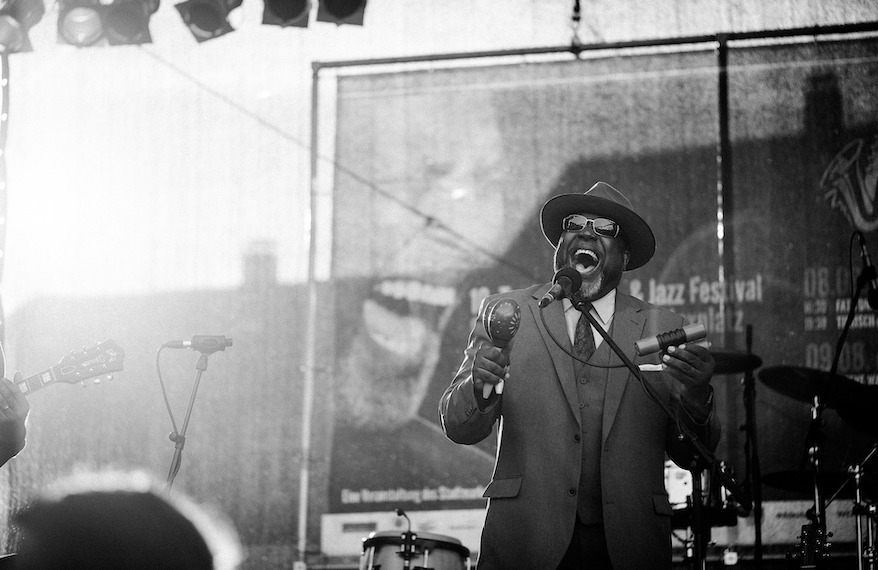
As spring continues to unfold and Jazz Appreciation Month
kicks into gear, it’s time to finish our retelling of the
history of jazz in America.
A changing city...
We left off in Congo Square, where slaves living in New
Orleans were allowed to gather and share traditions from
their homelands. The result was a historic melting pot
that blended musical concepts from many West African
cultures alongside the influence of European, Caribbean,
and Native American people also living in New Orleans at
the time. However, as the city’s demographics changed, the
meetings at Congo Square came under fire.
By 1860, the Black population, which was previously the
majority demographic in the city, constituted only 14% of
the population. In addition to higher birth rates among
white people already living there, the booming city was
attracting settlers from the Northeast. Many of the
newcomers brought harsher opinions of the enslaved people
and more suspicion about their gathering than the previous
European-minded regime. Over time, already strict
regulations for slaves became even stricter, until the
gatherings at Congo Square were banned outright.
Brass bands in the Civil War era:
Around the same time, a different New Orleans musical
tradition was coming exceedingly to the forefront. Since
before the Louisiana Purchase, parades were pivotal to the
social calendar of the city. Holidays, political events,
and famously funerals were accompanied by processions that
were generally loud, celebratory, and community-oriented.
At the heart of these parades were brass bands.
Between the Battle of New Orleans in 1815 and the start of
the Civil War in 1861, marching bands and their music
became more than just a way for the city to celebrate.
Military units across the state took immense pride in
their brass bands, which were often formed within specific
cultural communities (French, Spanish, Italian, Irish,
German, etc). These factors elevated brass bands beyond
their typical military function in New Orleans, where
individual bands represented community identity and
perseverance.
Two traditions, one sound
The years after the Civil War continued to bring dramatic
social change, most notably with the end of slavery and
the rise of segregation. Because of the city's history,
its black population was a bit more diverse than other
places in America. There was a large population of free
Black people who had earned their freedom under the city’s
early Spanish rule. Their descendants traditionally lived
downtown and enjoyed higher social status before the war,
often speaking French, owning property, and receiving
higher education. The English-speaking population of newly
freed slaves, on the other hand, generally lived under
harsher conditions with limited access to education or
economic mobility. Before the Civil War, they lived fairly
different lives, until segregation laws in the late 1800’s
forced these communities to coexist.
Where music is concerned, you had classically trained free
people of color who had enjoyed many of the social and
economic privileges previously reserved for white society,
including the opportunity to perform in formal, elite
settings for white audiences. They were now being barred
from white establishments, and only allowed to play with
and for "Uptown Blacks," who didn’t share the same formal
education or European musical sensibilities. The musicians
from this group often came from more informal musical
upbringings; they had learned to play through community
gatherings, street performances, churches, and parades,
where music was learned by ear, not off a page.
There was some clashing at first naturally, but over time,
the two groups began to influence one another until they
had created a shared Black music culture in New Orleans.
European techniques met African American musical
sensibilities in a continuation of the cultural exchange
that began at Congo Square.
Pioneers of early jazz:
As these musical traditions merged, a new generation of
performers began to define this new shared language of
early jazz. These legendary musicians can sometimes still
be identified as either “uptown” or “downtown”, but over
time that had less to do with their drastically different
styles of playing and learning music and more to do with
their names. Descendants of enslaved Black Americans often
had English (or American) sounding names, like Buddy
Bolden or Louis Armstrong, while descendants of free
Creoles of color often had French or Spanish names like
Sidney Bechet, or Jelly Roll Morton’s given name, which
was Ferdinand Joseph Lamothe.
These musicians helped turn jazz from a local performance
style based on the city’s circumstances at that time into
a more defined genre that other people could join and
expound upon. Jelly Roll Morton, as the self-proclaimed
inventor of jazz, is a great example. His work represents
one of the earliest attempts to formalize jazz, as he
blended elements from ragtime, blues, and improvisation
into composed pieces that people could perform (with room
for their own personal interpretation of course).
The Great Migration
By the early twentieth century, jazz was ready to leave
its nest. Of course it was still an enormous part of life
in New Orleans, but racial tensions and the search for new
audiences allowed musicians with the opportunity to do so
to leave Louisiana. The Great Migration was also happening
at this time, as millions of African Americans moved from
the South to cities in the North and Midwest.
They moved to cities like Chicago and New York, where jazz
evolved rapidly as it found new influences and adapted to
new audiences. Recording technology and radio broadcasts
also accelerated its spread across the country.
Appreciating New Orleans
Even as jazz spread across continents, its roots in New
Orleans remain essential. The resilient spirit of Congo
Square, the proud energy of brass bands, the commitment to
sharing and teaching all exist in the DNA of the genre.
If you’re interested in learning more, a trip to New
Orleans is really a once in a lifetime opportunity. But of
course, that’s not always in the cards, so
this article
from one of the city’s leading tourism companies is a
great read in the meantime! It contains a brief history of
African American influence on the city, from the first
arrival of African people to their lasting influence on
current traditions today.
This article
is another wonderful option that goes into more detail
about the topics mentioned in this article and the
previous one, with lots of direct quotes from influential jazz
musicians and historians. It also includes multiple
playlists to get you in the spirit!
Happy listening and happy Jazz Appreciation Month!
Jazz History: From Congo Square to an American Art