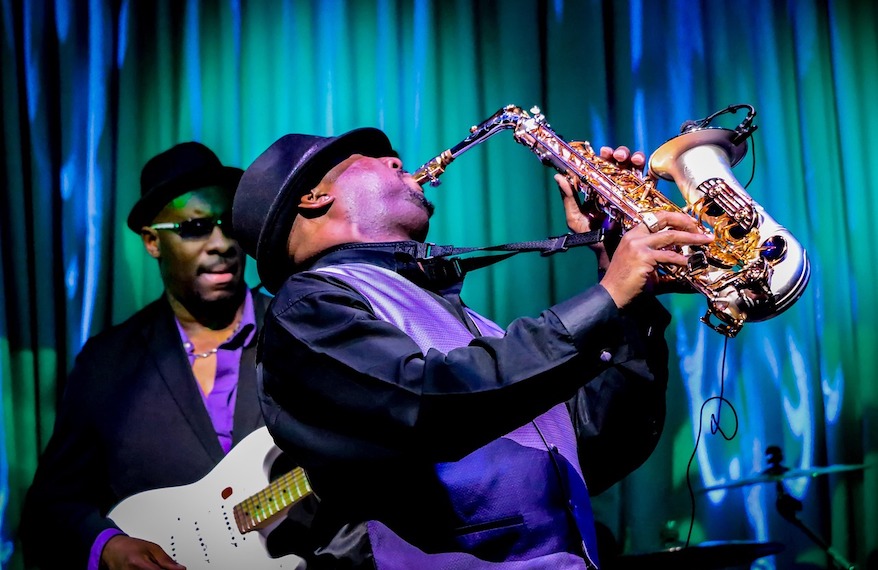
As the skies clear and the flowers start to bloom, we are
“Swinging into Spring” here at Falcetti Music! This time
of year is perfect to learn a bit more about the decidedly
homegrown genres of swing and jazz, and not just because
April is Jazz Appreciation Month. Like the season itself,
jazz is a masterclass in rebirth and renewal. It was the
reinvention of ancient musical traditions amidst the
diverse and evolving cultural landscape of nineteenth
century New Orleans. To better understand how jazz came to
be, let’s take a closer look at where and when its roots
began to take hold.
New Orleans’ colonial origins
The Mississippi River delta was fertile land inhabited by
Native Americans for hundreds of years before its
strategic location led to colonial European power
struggles. The actual city of New Orleans was founded in
1718 by the French, and existed for years under French
rule, then Spanish, then French again. This changing of
hands occurred until 1803, when the city became part of
the United States through the Louisiana Purchase. Despite
these political transitions, New Orleans retained a strong
French identity and a more generally European feeling than
any other city in the country.
That enduring European influence helped establish the city
as an early hotspot for the arts. Often referred to as the
opera capital of North America, New Orleans is said to
have one of the earliest opera companies in the country.
The French Opera House (located in what is now called the
French Quarter downtown) brought countless European operas
to American audiences for the first time, where they were
enjoyed by diverse audiences in their original languages.
At the same time, members of the higher social classes
embraced the European tradition of elaborate balls that
featured intricate costumes, large orchestras, and
traditional French dances.
As New Orleans became a major port city and cultural hub,
we can’t ignore the expansion of the transatlantic slave
trade. Life for enslaved people was harsh and highly
regulated; they worked tirelessly in the sugar and cotton
industries, in domestic service, and in other
labor-intensive roles that supported the growing economy.
The city flourished from the efforts of their labor while
strict laws limited their freedoms and ability to
congregate.
Congo Square and the preservation of African
traditions
In 1817, Congo Square, a small plaza in what is now Louis
Armstrong Park, was designated as a place where enslaved
people were allowed to gather. And so they did. Every
Sunday, hundreds of people came together to trade goods,
dance, and make music, often fashioning their own drums
and other instruments from the memory of traditional
African ones. The many distinct traditions, languages, and
practices of the African diaspora intertwined and evolved
over the years through constant interaction and
improvisation. This melting pot of African dance and music
was the foundation on which jazz was built. Louis
Armstrong is said to have noted that if New Orleans is the
cradle of jazz, the Gold Coast of West Africa must be the
mother.
As the gatherings expanded to include Native Americans,
white Europeans, and refugees from Haiti and Cuba, the
musical exchange continued to grow. The many
African-derived musical concepts like the bamboula rhythm
and call and response singing blended with Caribbean
syncopation, Indigenous movement and ceremonial elements,
and European melodic and harmonic ideas. The number of
slaves born in America also increased, adding a unique
cultural perspective to the mix.
How this history informs jazz
The rhythmic freedom and collaborative spirit of Congo
Square helped lay the foundation for one of jazz’s
defining characteristics: improvisation. Unlike European
classical music, which requires musicians to strictly
follow the composer’s written score, jazz emphasizes the
performers, giving them the freedom to experiment. This
approach created unique performances shaped both by
external influences and deeply personal interpretations.
Over time, these performances developed into a genre full
of surprises and contradictions. Jazz balances the
backdrop of European high society with the resilience of
Afro-Caribbean traditions and their reinterpretation in
America. It’s an inherently individual art form, defined
by distinct voices, solos, and styles, yet it’s also a
music created by and for a community that spans
continents.
There was still some more evolution before jazz became
what we know today, and it continues to evolve! But its
origins remain deeply tied to the city of New Orleans, a
city shaped by diversity and fueled by the human ability
to adapt, connect, and persevere.
As we enter Jazz Appreciation Month, I invite you to dive
deeper into the stories of New Orleans during this time in
history.
This article
includes in-depth accounts of Congo Square during the
nineteenth century, and
this substack post
uses a book about jazz as a jumping-off point to explore
the significance of Congo Square. If you have a little
more reading time, this month would be a perfect
opportunity to
check out the book
the author is referencing!
And as always, the easiest thing to deepen your musical
knowledge is to listen to new things!
This playlist
is an homage to Congo Square, highlighting African
artists, energetic percussion, call-and-response singing,
and other elements outlined in this article.
This one
is a more abstract and modern take, with calming soul and
R&B vibes for easy listening.
Happy listening and happy Jazz Appreciation
Month!
New Orleans and the Birth of Early Jazz