

If you’ve ever heard your child insist, “I don’t need to practice,” you’re probably not alone. It’s a familiar frustration for parents who are putting time, money, and energy into lessons and want to see their child enjoy music and make progress.
The truth is that even a child who genuinely loves playing an instrument may still resist practicing at home.
For some students, progress feels too slow. Others get bored with repetition, frustrated by difficult pieces, or distracted by everything else competing for their attention. Sometimes they’re not even sure what they’re supposed to accomplish when they sit down to practice.
Before practice turns into a battle, it helps to figure out what’s getting in the way. Better practice habits usually come from making practice feel more manageable, more purposeful, and more rewarding.
Why kids resist practicing
In our experience, reluctance to practice usually has a reason behind it. The key is figuring out what your child is responding to, because the solution will likely look very different from one student to the next.
A few of the most common obstacles include:
Progress feels too slow
Kids often know how they want a song to sound long before they can play it that way. That gap can be frustrating, especially when improvement happens gradually instead of all at once.
Repetition gets old
Scales, exercises, and the same few measures of a song can start to feel tedious. That repetition has a purpose. It helps students become more comfortable with the patterns and movements they encounter in the music they want to play. Younger students will likely not understand that connection.
The practice goal is unclear
“Go practice for 20 minutes” can sound specific without giving a child much direction. What should they work on first? What does “done” look like? A vague assignment can make practice feel aimless.
The music feels overwhelming
When a piece or exercise feels too difficult, some students get frustrated and avoid practicing it rather than continue to struggle with the same passage.
Other activities compete for their attention
Homework, sports, friends, games, phones, and other activities all compete for attention. If practice doesn’t already have a place in the routine, it can be the first thing to get pushed aside.
Practice has become a source of pressure
Parents naturally want to see their children make progress. When every practice session turns into a negotiation or a correction, studying music can start to feel like an obligation rather than something a child enjoys. At the other extreme, a lack of interest at home can send the message that practice doesn’t matter.
They’re afraid of getting it wrong
Some students avoid practicing because they don’t want to feel unsuccessful or disappoint their teacher. That can look like a lack of motivation from the outside, even when the real issue is frustration or self-consciousness.
The environment makes it hard to focus
Noise, siblings, screens, and an uncomfortable setup can all make practice harder than it needs to be. Even a few small distractions can make it difficult for a student to settle in and stay focused.
Practice needs some room for fun
Kids also want to play music they like, music they can experiment with, and to make some selections of their own. If practice is only drills and assignments, it can start to feel like all work and no play!
Start with the biggest obstacle
Your child may fit several of those descriptions, and that’s okay. You don’t need to solve everything at once.
Pay attention to where the resistance seems strongest. Is it getting started? A particular piece? Repetition? Distractions? The feeling that practice takes too long? Start with the issue that causes the most frustration and observe what changes from there.
How to make practice easier and more productive
Once you have a better sense of what’s getting in the way, you can adjust the routine. Practice doesn’t have to be perfect to be productive. It just needs to feel manageable enough that your child is willing to come back to it tomorrow.
Make progress easier to see
One reason practice can be frustrating is that improvement in music happens in small increments. Your child may not notice a difficult passage is smoother today than it was three days ago, even though you see progress.
This is when encouragement can help. Instead of waiting for a whole piece to sound polished, notice the smaller wins: a rhythm that finally clicked, a cleaner transition, or simply getting through a tricky section without stopping.
Break big assignments into smaller goals
Music teachers frequently see students do better when they leave a lesson knowing exactly what to work on.
Being told to practice an entire song can feel overwhelming, especially when the piece is difficult. Instead, try making the goal smaller and more specific. Maybe today is about the first eight measures, tomorrow the hardest section, and the next day can focus on scales or a technical exercise.
For a young student, “play these four measures slowly three times” is much easier to understand than “practice for 20 minutes.”
Slow it down
Many kids want to play a piece at the speed they’ve heard it performed. That makes sense, but speed can work against them when they’re still learning the notes, rhythms, or finger patterns.
Slow the music down until they can play it successfully. A metronome can help establish a comfortable starting tempo, and difficult passages can be broken into even smaller pieces if needed. From there, the tempo can increase gradually as the music becomes more secure.
Accuracy comes first. Once the notes, rhythms, and movements feel secure, speed can follow.
Give practice a regular place in the day
If practice only happens when everything else is finished, it will likely never happen at all.
Schoolwork, sports, friends, and other activities tend to take priority, which can leave music until the end of the day when both you and your child are tired. A regular practice time can help take some of the daily negotiation out of it.
It doesn’t need to be rigid. For a younger child, practice might happen while dinner is being made, with a quick “mini concert” for whoever is in the kitchen. An older student might record part of a piece and send it to a parent or teacher.
The idea is simply to give practice a natural place in the day instead of letting it become the thing everyone remembers at bedtime.
Show interest without hovering
Parents can make a big difference simply by paying attention.
Ask your child to play something they’ve been working on, listen for a few minutes, and notice the progress they’re making. You can also ask what feels good and what feels difficult. Those small moments show that the work matters without turning every practice session into a performance review.
Encouragement and structure both matter, but so does giving your child some ownership of the process.
Make the practice space work for your family
A dedicated music room isn’t necessary to create a good practice environment. Instead, consider turning off the television, putting the phone in another room for 20 minutes, asking siblings to give the student a little space, or using headphones when the instrument allows for it.
Keep the teacher in the conversation
If practice is consistently difficult, talk with your child’s teacher. They may spot patterns that are hard to see at home, especially if they can understand where practice tends to break down during the week. Regular lessons can also give students a sense of accountability and help reinforce more consistent practice habits between sessions.
Ask the teacher what their expectations are between lessons, what your child should prioritize, and whether there’s another way to approach a piece or exercise that has become frustrating. Then let the teacher know what you’re seeing at home.
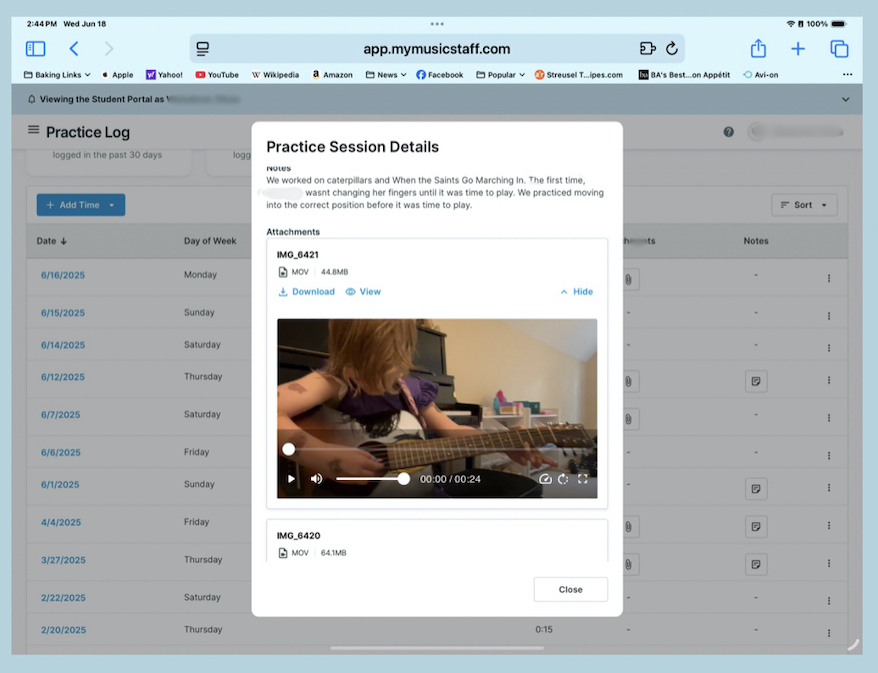
Use My Music Staff to share practice videos
For older students, recording part of a practice session can be a useful way to stay accountable and get feedback between lessons. Falcetti Music students can use the My Music Staff portal to upload practice videos and share them with their teacher. If you’re not sure how to access that feature, ask your teacher or the Falcetti Music education team for help.
Remember: better practice habits take time
Even with a good routine in place, there will still be days when practice is a struggle. That’s part of the process.
Learning an instrument takes patience and learning how to practice does too! Parents can help by staying curious about what’s getting in the way, keeping expectations clear, and making small adjustments when needed.
Some days this may mean shortening the session. Other days it might mean changing the order of activities, slowing a piece down, or simply letting your child spend a few minutes playing something they enjoy.
You’re not trying to eliminate every complaint about practicing. You’re helping your child build the skills and habits that make steady progress possible while keeping music something they continue to enjoy.
And if you’re not sure what should change, start with your child’s teacher. A quick conversation can help determine whether the issue is the assignment, the routine, the difficulty level, or something else entirely. That keeps everyone on the same page and gives your child a better chance of succeeding between lessons.
Ready to help your child make more progress with music?
Whether your child is just beginning music lessons or working to build stronger practice habits, the right teacher can help make progress feel more manageable, rewarding, and fun.
Falcetti Music offers lessons for kids, teens, and adults in Springfield, Simsbury, and online. For Springfield, MA music lessons, call 413-543-1002. For music lessons in Simsbury, CT, call 860-932-2424.